I. Introduction to Face Milling for CNC Machining Services
In the world of CNC machining service, achieving perfectly flat and smooth surfaces is not just an aesthetic desire—it’s a fundamental requirement for the functionality and performance of countless components. This is where face milling steps in as a cornerstone process. But what exactly is face milling, and why should it matter to you, a user seeking or utilizing CNC machining service?
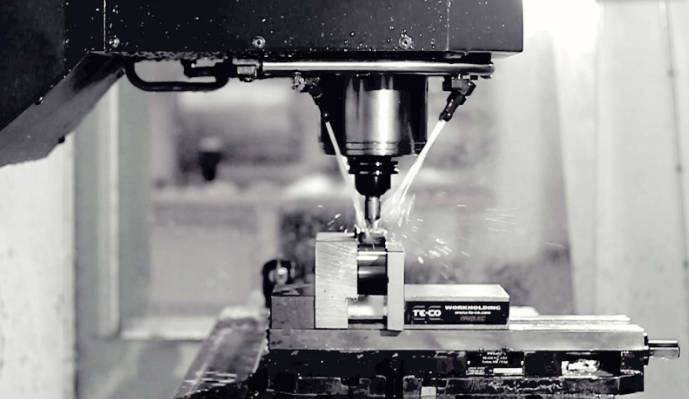
Simply put, face milling is a machining operation that uses a rotating cutter to remove material from the flat surface of a workpiece, creating a smooth and accurate finish. Think of it as skimming the top layer of a material to prepare it for subsequent operations or to achieve final dimensional specifications. It’s crucial because it directly impacts surface quality, flatness, and the overall efficiency of material removal, setting the stage for the success of your project. If you’re looking for high-quality parts, understanding face milling is key to appreciating the capabilities of a competent precision CNC machining company.
II. The Core Principles of Face Milling
The primary goal of face milling is to achieve exceptionally flat and smooth surfaces. This isn’t just about making parts look good; it’s about ensuring they fit together perfectly, distribute stress evenly, and perform reliably.
How it Works: A face mill, typically a multi-insert cutter, rotates rapidly while traversing across the workpiece. Each cutting insert shaves off a small amount of material, producing chips. The overlapping paths of these inserts result in a consistently flat surface. It’s a bit like mowing a lawn, but with incredible precision.
To achieve optimal results, several key parameters must be meticulously controlled:
- Cutting Speed (SFM/m/min): This refers to how fast the cutting edge of the tool moves relative to the workpiece. It’s measured in surface feet per minute (SFM) or meters per minute (m/min). Proper cutting speed is critical for balancing tool life and chip formation, preventing excessive heat buildup or premature wear.
- Feed Rate (IPM/mm/min): This is the rate at which the cutter advances across the workpiece. Measured in inches per minute (IPM) or millimeters per minute (mm/min), the feed rate directly influences the surface finish and the rate of material removal. Too high, and you get a rough finish; too low, and you’re wasting time.
- Depth of Cut (DOC): This is the amount of material removed in a single pass, perpendicular to the machined surface. A higher DOC means more material removed per pass, potentially speeding up the process but requiring more power and a sturdier setup.
- Width of Cut (WOC): This refers to the portion of the cutter’s diameter that engages with the workpiece during a pass. Optimizing WOC is essential for efficient chip evacuation and minimizing tool deflection.
III. Common Face Milling Tools and Their Applications
The right tool for the job is paramount in face milling, and various types of cutters are employed depending on the material, desired finish, and part geometry.
- Indexable Insert Face Mills: These are the workhorses of face milling. They feature a cutter body with replaceable carbide inserts. Their versatility comes from the wide array of insert geometries and coatings available, allowing them to be adapted for virtually any material or application. When considering CNC prototype machining or high-volume production, these are often the default choice due to their flexibility and cost-effectiveness over the long run.
- Solid Carbide End Mills: While primarily used for slotting and profiling, larger diameter solid carbide end mills can also be used for face milling, especially for smaller features, fine finishing, or when a very specific geometry is required. They offer excellent rigidity and can produce very high-quality finishes.
- Shell Mills: These are larger-diameter cutters that typically mount onto an arbor. They are excellent for roughing operations on large surfaces where significant material removal is needed quickly.
Insert Geometries and Materials: The heart of an indexable face mill lies in its inserts. Their shape and material properties are critical:
| Insert Geometry | Common Applications | Benefits |
| Square | General Purpose, Roughing | Strong edges, durable |
| Round | High Feed, Contouring | Good for high feed rates, reduces chipping |
| Octagonal | General Purpose, Finishing | Good balance of strength and multiple cutting edges |
| Triangular | Light Cutting, Finishing | Sharp, good for fine finishes |
The choice of insert material and coating is also vital. Carbide is the most common, but specialized coatings like TiN (Titanium Nitride), AlTiN (Aluminum Titanium Nitride), and PVD (Physical Vapor Deposition) or CVD (Chemical Vapor Deposition) dramatically improve wear resistance, heat resistance, and lubricity, extending tool life and enabling higher cutting parameters across different materials.
IV. Material Considerations in Face Milling
Different materials behave distinctly under the cutting tool, necessitating tailored approaches in face milling. A skilled precision CNC machining company will possess this expertise.
- Aluminum and Non-Ferrous Metals: These materials are generally soft and ductile. They require high cutting speeds, sharp inserts, and good chip evacuation to prevent material buildup on the cutting edges. High rake angles are often preferred.
- Steels and Stainless Steels: These materials are tougher and generate more heat during machining. Lower cutting speeds, stronger inserts, and effective coolant application are essential to manage heat and prevent work hardening, especially in stainless steels.
- Superalloys (e.g., Inconel, Titanium): These are notoriously difficult to machine due to their high strength at elevated temperatures and propensity to work-harden. Specialized tooling, very rigid setups, and generous coolant flow are crucial for successful face milling of superalloys.
- Plastics and Composites: These materials require specific considerations for chip evacuation and heat management, as they can melt or delaminate. Sharp, low-friction tooling is often used, and sometimes, air blast is preferred over liquid coolant to prevent material absorption.
Optimizing parameters for specific materials is where experience and advanced machining strategies come into play. A good CNC machining service provider will fine-tune these variables to maximize efficiency and part quality.
V. Key Factors for Successful Face Milling (and Why Your Service Provider Cares)
The success of a face milling operation extends beyond just removing material. Several critical factors contribute to the overall quality and cost-effectiveness of your machined part.
- Surface Finish: Measured in Ra (Roughness Average), achieving the specified surface finish is often a primary objective of face milling. It directly impacts the part’s functionality, aesthetics, and ability to accept coatings or subsequent treatments.
- Flatness and Perpendicularity: For many applications, the flatness of the machined surface and its perpendicularity to other features are critical for proper assembly and performance. Face milling is the go-to process for achieving these tight geometrical tolerances.
- Chip Evacuation: Efficient removal of chips from the cutting zone is vital. Poor chip evacuation can lead to recutting, poor surface finish, increased heat, and premature tool wear. Your provider invests in effective chip management systems.
- Tool Life Management: Extending tool life reduces CNC machining cost and downtime. This involves selecting the right tools, optimizing cutting parameters, and using effective coolants. A china CNC machining facility with advanced tool management practices can offer competitive pricing and faster turnaround times.
- Vibration and Chatter Prevention: These are the banes of any machining operation. Vibrations lead to poor surface finish, reduced tool life, and dimensional inaccuracies. A rigid setup, proper tool holding, and optimized cutting parameters are essential to prevent chatter.
VI. What to Discuss with Your CNC Machining Service Provider
Effective communication with your CNC machining service provider is paramount to getting the parts you need. Here’s what you should be prepared to discuss regarding face milling:
Critical Information to Provide:
- Material type and hardness: Be specific about the exact alloy and any heat treatment.
- Required surface finish (Ra value) and flatness tolerances: Provide clear specifications on your technical drawings.
- Part geometry and fixturing considerations: Any unique features or challenges in holding the part for machining.
- Volume/production requirements: This influences tooling choices and setup strategies. For CNC prototype machining, speed might be prioritized; for production, cost per part might be the focus.
Questions to Ask Your Provider:
- “What tooling do you recommend for my specific material to achieve the desired finish?”
- “How do you ensure the required surface quality and flatness tolerances are met?”
- “What are your capabilities for achieving very tight tolerances in face milling?”
- “Can you provide examples of similar projects you’ve done involving demanding face milling operations?”
VII. Troubleshooting Common Face Milling Issues (How Your Provider Solves Them)
Even with the best planning, issues can arise. A proficient precision CNC machining company will have systematic approaches to troubleshooting:
- Poor Surface Finish: This can be due to incorrect feed rates, worn inserts, vibration, or inadequate coolant. Solutions include optimizing parameters, replacing inserts, or improving setup rigidity.
- Chatter Marks: Often caused by an unstable setup, excessive depth of cut, or incorrect spindle speed. Solutions involve increasing rigidity, reducing DOC, or adjusting speed to avoid resonant frequencies.
- Excessive Tool Wear: Indicates parameters are too aggressive or the wrong tool/coating is used for the material. Adjusting speeds and feeds, or changing insert grade, can mitigate this.
- Dimensional Inaccuracy: Can stem from tool deflection, thermal expansion, or improper machine calibration. Solutions include using more rigid tools, managing thermal effects, or performing machine compensation.
VIII. Conclusion: Partnering for Precision with Face Milling
Face milling is more than just flattening a surface; it’s a critical process that lays the foundation for high-quality, precise parts in CNC machining service. Understanding its principles, the tools involved, and the factors influencing its success empowers you to make informed decisions and communicate effectively with your machining partners.
Whether you’re developing a new product with CNC prototype machining or producing thousands of components, partnering with an experienced and capable precision CNC machining company is paramount. They possess the expertise, the advanced machinery, and the commitment to quality that ensures your parts meet the exact specifications, efficiently and cost-effectively.
Ready to discuss your next project? Reach out to a trusted CNC machining service today to leverage their expertise in face milling and other precision operations.